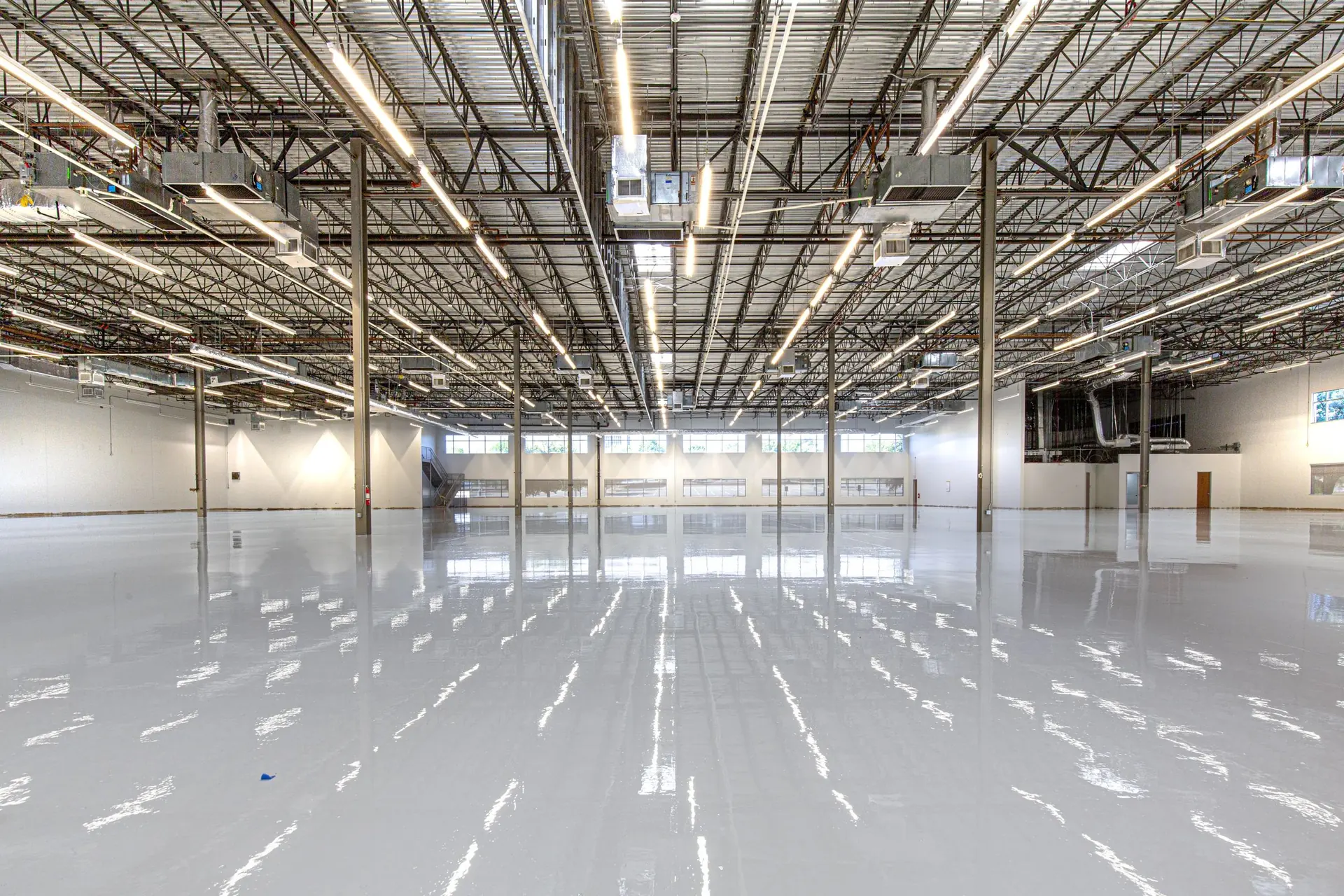

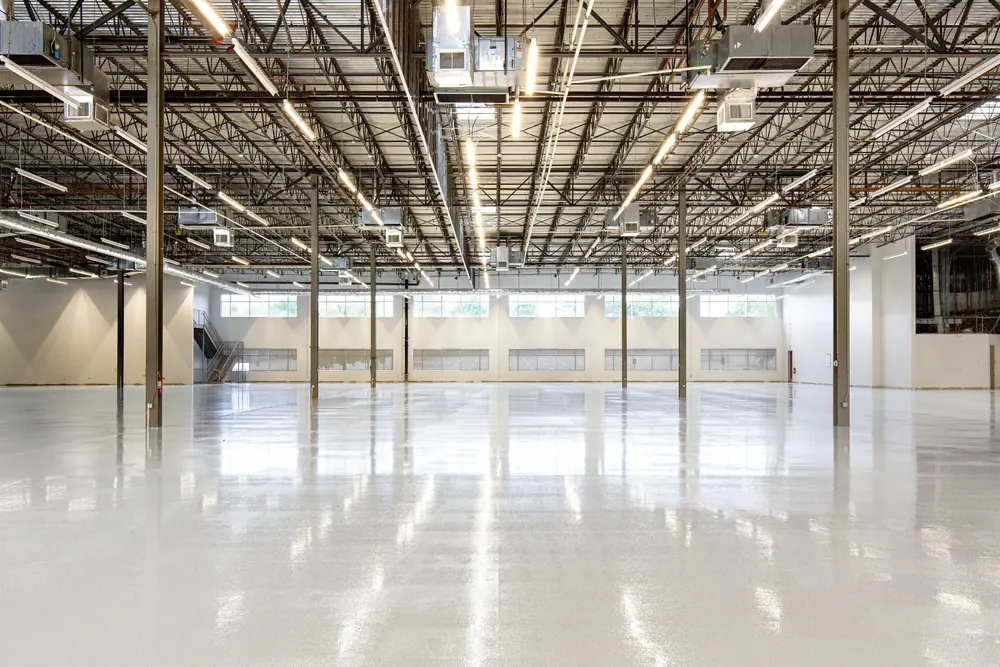
Start with the concrete
A coating is only as good as the slab under it. Dust, laitance, old coatings and oil stop a new coating from bonding. Diamond grinding opens the surface, and cracks and broken joints are repaired before anything is applied.
Match the system to the traffic
Pedestrian areas need far less than aisles with loaded forklifts. Heavy traffic calls for a thicker build-up, while a dust-proofing seal can be enough for light storage. Joints are where floors fail first, so they get their own repair detail.
Think about what gets spilled
Oils, fuels, cleaning chemicals, acids and food products all attack floors differently. Tell your contractor what is used and stored on the floor so the resin is chosen for it.
Plan the downtime
Some systems need days to cure, others such as MMA cure in hours. Work can be phased area by area or done over weekends so the operation keeps running.
Finish and marking
Choose a colour and finish that are easy to clean and light the space well, and plan walkways, bays and danger zones before the topcoat so the line marking is part of the system.